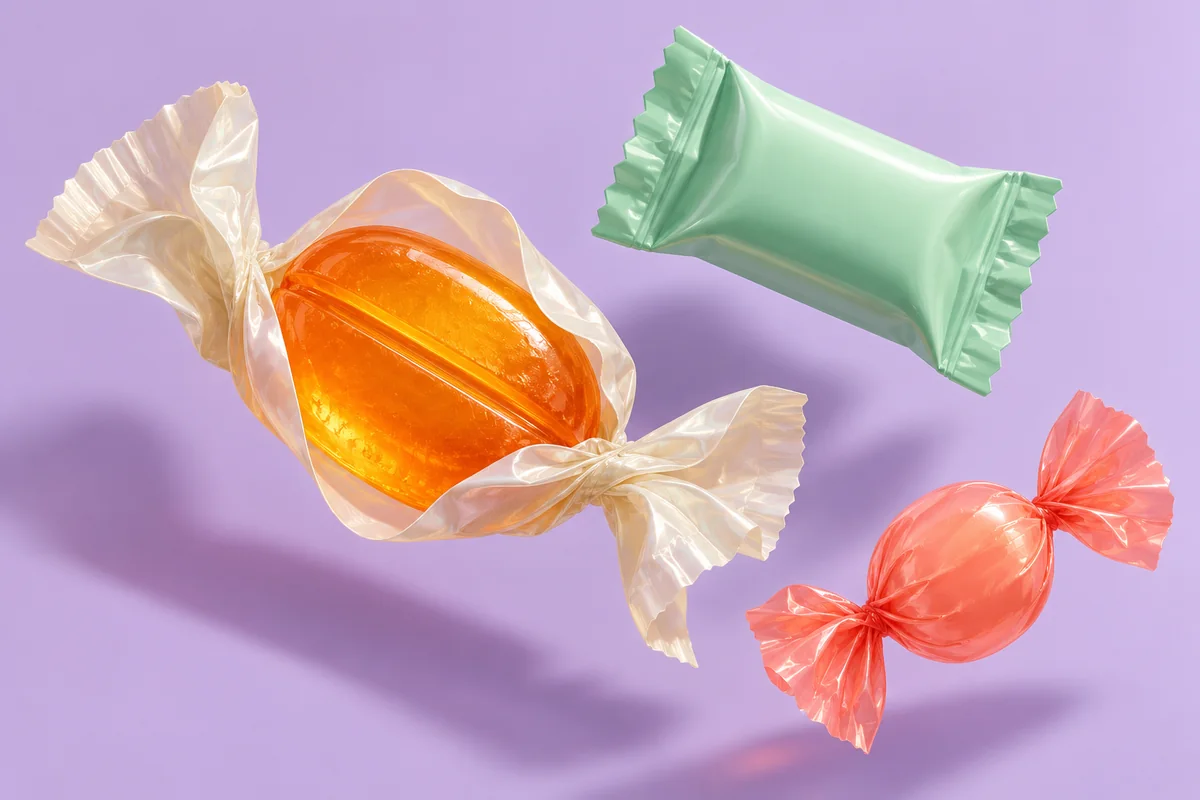
A few pieces of sugar-free gum, a protein bar and some sweets may not seem connected. But they can share ingredients called sugar alcohols, or polyols. Looking at that small-print list can be more useful than deciding that all sugar-free foods upset your stomach.
What the name means
Sugar alcohols are sweetening ingredients such as sorbitol, mannitol, xylitol and maltitol. The word alcohol here does not mean the alcohol in an alcoholic drink. Some are incompletely absorbed and can contribute to gas, bloating or diarrhoea in susceptible people.
Different products and different polyols are not interchangeable. Your response may depend on the amount and your circumstances. The label is a starting point for a question, not proof that an ingredient is harmful or responsible for every symptom after a snack.
Several small servings can be easy to overlook
A day may include gum during a commute, a snack bar at work and sweets after dinner. When checking a possible pattern, consider all of them rather than focusing only on the last thing you ate. Product names and portion sizes are more useful than writing “ate sugar-free”.
Check whether the ingredient is actually a polyol. Not all sweeteners belong to this group, and a product may contain other relevant ingredients such as milk or added fibre. Avoid transferring an assumption about one ingredient to every low-sugar product in the cupboard.
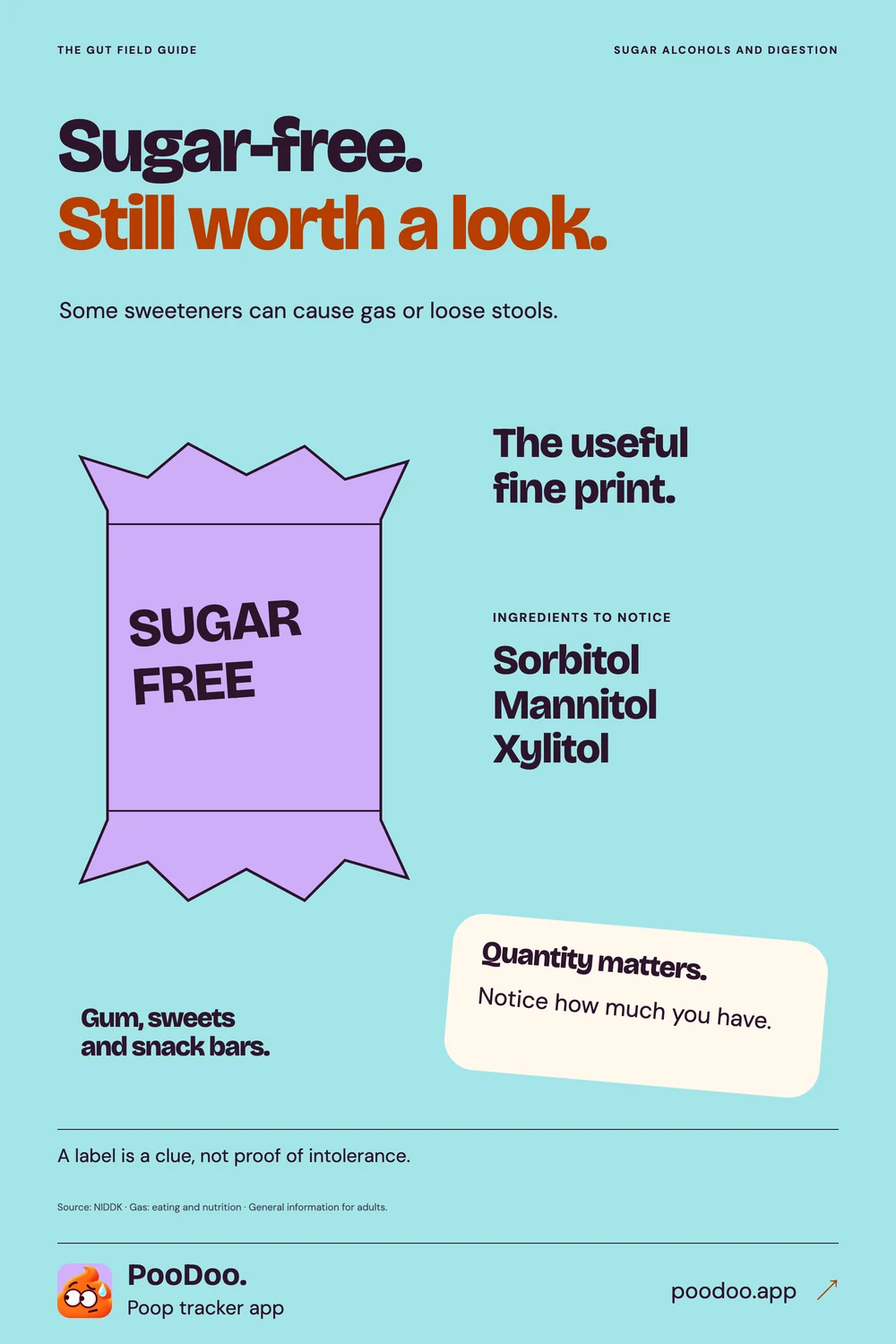
Read the ingredient list before making a rule
Look for familiar names and any label warning about a laxative effect. A nutrition panel may state a polyol amount, but not every label presents it in the same way. If the amount is unclear, keep the product name or a photo of the packaging for your own reference.
If symptoms are mild and no warning signs are present, reducing a frequently used polyol-containing snack may be a manageable change to discuss or try. Keep other habits familiar. There is no need to eat a large quantity to test a reaction or to remove every sweet food.
Make the comparison concrete
Note the product, how much you had and approximately when. Record bloating, discomfort, urgency and stool consistency separately. Include a day with the same product and no symptoms if that happens; otherwise a diary can exaggerate a connection.
For example, compare “one small serving after lunch” with “several servings throughout the afternoon”. That describes exposure more clearly than a yes-or-no sweetener box. If symptoms continue after a change, do not keep expanding the forbidden-food list. Ask whether another explanation needs checking.
A label should not explain away illness
Get medical advice for persistent or recurrent diarrhoea, pain or unexplained weight loss. Blood or black tarry stool requires prompt assessment. Severe pain, repeated vomiting or signs of dehydration need urgent help. Even if a packet mentions a laxative effect, it is not safe to assume that explains concerning symptoms.
A three-minute label check
- Identify the named sweetener rather than guessing from the front label.
- Write the product and portion you actually ate.
- Count repeated servings across the day.
- Keep the observation separate from a conclusion about cause.
A few more useful answers
Are all sugar substitutes polyols?
No. Sugar alcohols are one group. Other sweeteners have different properties, so check the actual ingredient.
Is there one amount everyone can tolerate?
No universal amount predicts comfort for everyone. Product composition, portions and individual circumstances vary.