
When you suddenly need the bathroom, analysing every meal is rarely the first priority. Comfort, access to a toilet and enough fluid come first. Once you are settled, a few clear observations can help distinguish a brief change from a problem that needs assessment.
Consistency and urgency are separate clues
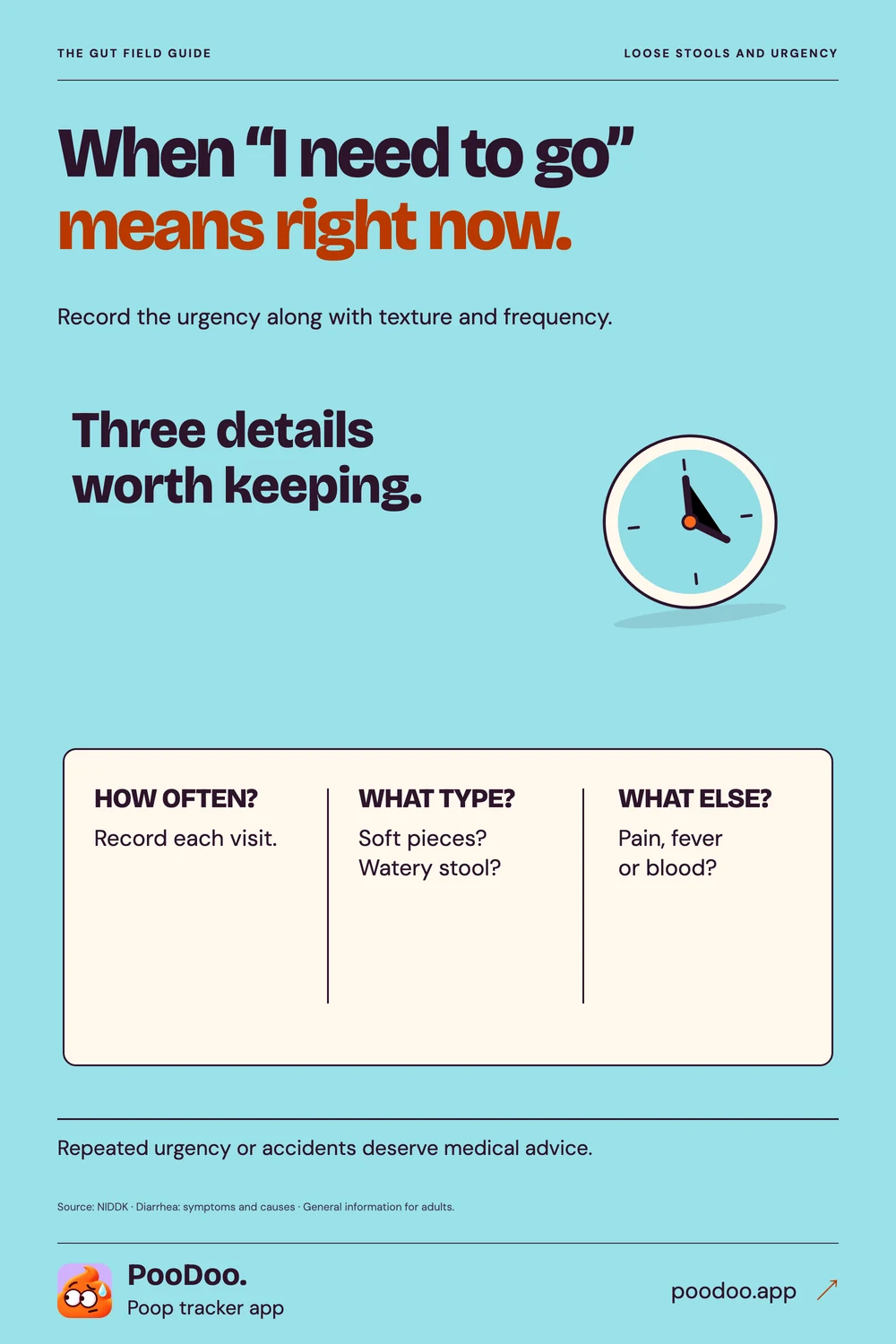
Loose or watery stool happening repeatedly, often three or more times a day or more than usual for you, can be diarrhoea. Urgency describes how difficult it is to wait. Someone can have one without the other, so record both rather than using a single “bad stomach” label.
The Bristol chart can help describe texture: type 6 is mushy and type 7 watery. It does not identify an infection or intolerance. Note how often you went, when the pattern started and whether it is different from your usual routine.
Replace what you are losing
Repeated watery stools can cause fluid and salt loss. Drink regularly, using small sips if nausea makes that easier. A pharmacist can advise about oral rehydration solution, including preparation and whether it suits your health circumstances. People with fluid restrictions or significant medical conditions need individual advice.
Do not treat a drinking target in an app as a plan for an acute illness. The amount and type of replacement may need to change. If you cannot keep fluids down or are becoming dehydrated, get medical help instead of trying to complete a daily goal.
Avoid an instant verdict about the last meal
Infections, medicines and food-related issues can all contribute to loose stool. A recent antibiotic course or travel history is worth mentioning. The last meal before symptoms is not automatically the cause, and a recurring problem should not be reduced to a list of suspect foods.
When you feel able to eat, you can generally return toward your usual diet as tolerated. Avoid a prolonged restrictive “cleanse”. Ask a pharmacist or clinician before choosing an antidiarrhoeal medicine, particularly if there is fever or blood; this article is not a medication plan.
Keep the record useful, not exhausting
Record the approximate number of visits, consistency and whether urgency interrupted sleep, work or travel. Note fever if measured, vomiting and whether you are urinating less. These observations are more useful during an acute episode than a detailed food score.
If symptoms settle, write when they ended. If they return, keep separate episodes rather than merging everything into one bad week. A concise timeline can help a clinician decide what questions or tests are relevant without pretending the diary already has the answer.
When not to wait
Seek prompt medical help for blood, black tarry stool, severe pain, frequent vomiting or dehydration. Contact a clinician for diarrhoea lasting more than two days, high fever or six or more loose stools a day, sooner if older, pregnant, immunocompromised or medically vulnerable. Confusion, fainting or inability to drink needs urgent care.
Record the essentials
- When did the episode start?
- How many loose visits occurred, approximately?
- Can you keep fluids down and urinate normally?
- Are there warning signs or recent travel, antibiotics or medicine changes?
A few more useful answers
Is one soft stool diarrhoea?
Not necessarily. Frequency, wateriness, your usual pattern and other symptoms all matter.
Should I stop eating until it passes?
Prolonged fasting is not generally needed. Eat as you feel able, while prioritising fluids and getting advice if symptoms are severe or persistent.