Your waistband feels tighter by evening, but lunch seemed ordinary. Bloating can be frustrating partly because the cause is not obvious. Before writing off whole food groups, separate what you feel, what you can see and what else happened that day.
Fullness and visible swelling are different
Bloating is a sensation of fullness or pressure. Distension means the abdomen visibly becomes larger. They may happen together, but not always. Some gas is a normal part of digestion; the important question is how symptoms affect your comfort and everyday activities.
Use a description you can recognise later. “Pressure after dinner” is different from “sharp pain on one side”. You do not need a tape measure or repeated body checks. A brief note about timing and impact is usually more practical than trying to quantify every sensation.
Food is only part of the picture
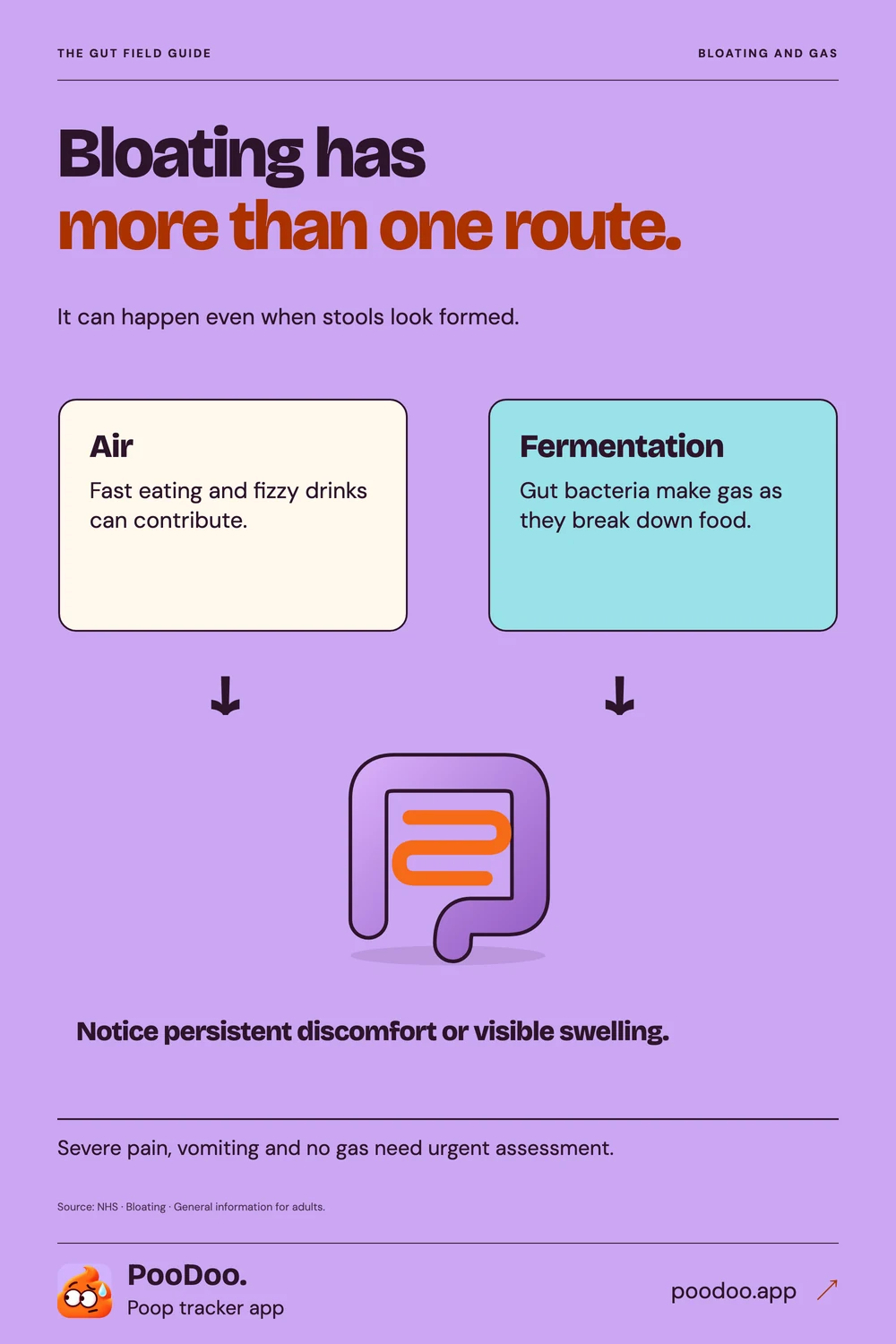
Swallowed air and the breakdown of some carbohydrates by gut bacteria can contribute to gas. Constipation, food intolerance and conditions such as irritable bowel syndrome can also be involved. The same sensation can therefore have more than one explanation.
A fizzy drink, rushed meal and new snack might all appear on the same afternoon. That does not tell you which, if any, caused the problem. Include the meal size and pace as well as its ingredients, and notice whether you were already uncomfortable before eating.
Try a smaller adjustment before a bigger restriction
Eating more slowly or choosing a still drink instead of a fizzy one is an approachable starting point. If a very large meal is uncomfortable, consider a more comfortable portion pattern. Avoid turning a list of foods that can produce gas into a permanent list of forbidden foods.
If you need to remove many foods to feel comfortable, ask a clinician or dietitian for help. Specialist plans such as a low-FODMAP diet need structure and a way back to a varied diet. They are not a general wellness challenge to start from a social-media graphic.
Keep the note short and specific
Record when the sensation began, whether the abdomen looked swollen and whether stool or passing gas changed it. Add constipation, diarrhoea or pain separately. A daily impact note, such as “had to stop a walk”, helps explain why the symptoms matter.
Include symptom-free meals too. If only uncomfortable days are recorded, almost any frequent ingredient can look suspicious. Review several ordinary days rather than zooming in on the last meal. The diary can organise a conversation, but cannot prove an intolerance.
Recurring bloating deserves a conversation
Get medical advice for frequent, persistent or worsening bloating, particularly with weight loss, blood in stool or ongoing bowel changes. Sudden severe abdominal pain, a markedly swollen abdomen, repeated vomiting or inability to pass stool or gas needs urgent assessment. Do not dismiss these as ordinary trapped wind.
Try this note after a meal
- Write the meal time and approximate portion.
- Describe pressure, swelling or pain in your own words.
- Add bowel symptoms and any interruption to your plans.
- Include a comfortable meal as a useful comparison.
A few more useful answers
Does gas mean I am eating badly?
No. Many nutritious foods can produce gas. Comfort, portion size and your individual circumstances matter more than a good-food or bad-food label.
Should I cut out gluten first?
Not automatically. Persistent symptoms deserve assessment before broad restrictions. Tell your clinician if you are considering changing gluten intake.