
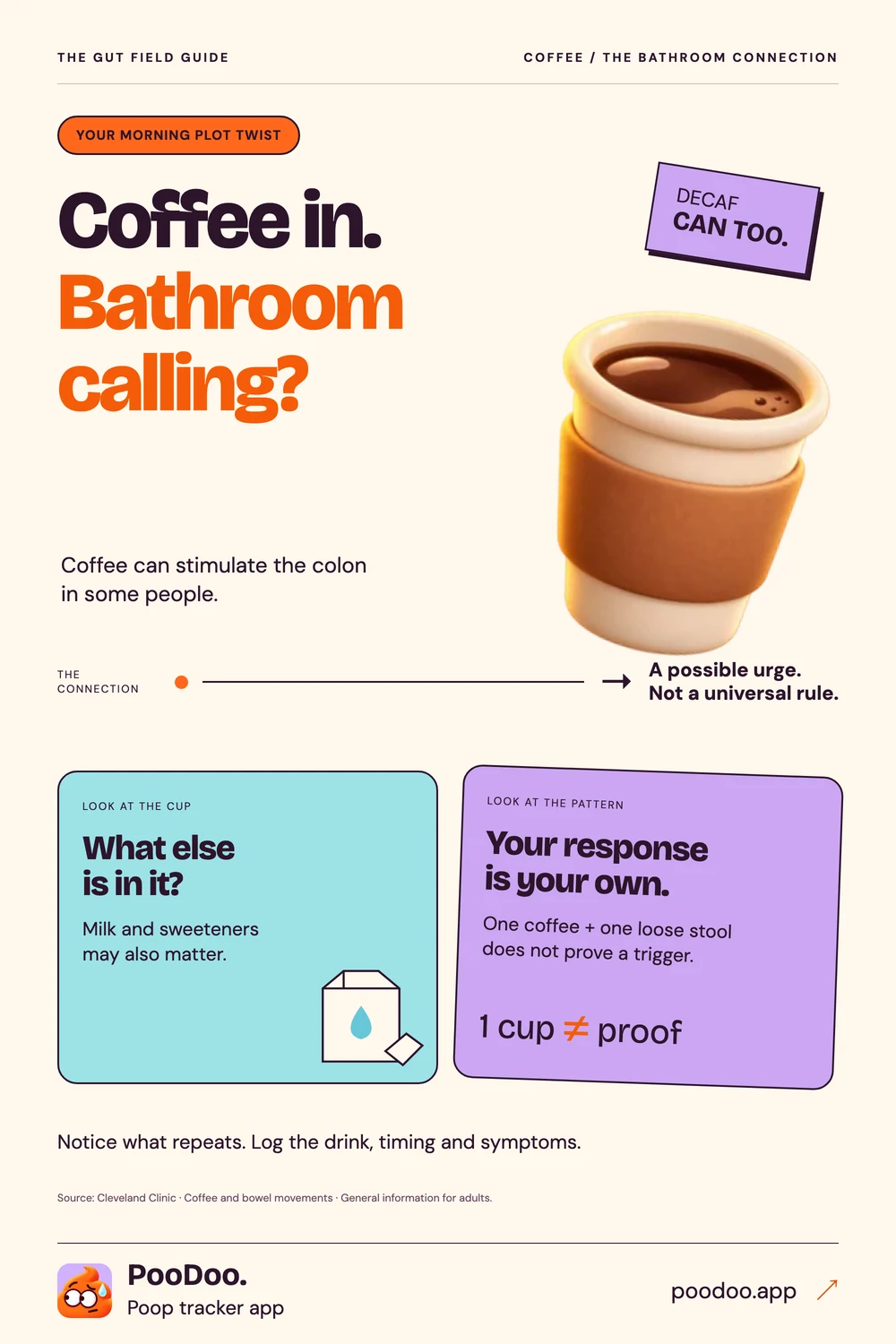
You take a few sips, and suddenly the bathroom moves to the top of the morning agenda. That experience is familiar to some coffee drinkers and absent for others. It does not automatically mean coffee is harmful or that you need to give it up.
Coffee affects people differently
A small physiological study found that both regular and decaffeinated coffee increased lower-colon activity in some participants. It helps explain why caffeine alone is not a complete explanation. The study was small, so it does not tell us what every person will experience or establish coffee as a treatment.
A comfortable bowel movement after a drink is different from cramps, repeated urgency or watery diarrhoea. Start by describing the response rather than deciding that needing the bathroom is either proof of excellent digestion or a sign that something is wrong.
The cup comes with other ingredients
A large milky coffee, a black espresso and a sweetened iced drink are not the same exposure. Milk, certain sugar-free syrups, serving size and the meal beside the drink may all be relevant. That does not make any one ingredient the automatic culprit.
For example, a hurried weekday takeaway and a relaxed weekend coffee differ in more than caffeine. Record enough detail to make the comparison fair: approximate size, milk or sweetener, meal timing and whether the symptoms had started before the drink.
Choose a manageable comparison
If symptoms are mild and you want to explore the pattern, change one ordinary part of the routine rather than several at once. A smaller serving is one possibility. Keep the rest of the breakfast familiar and avoid testing anything that has caused severe symptoms or a suspected allergic reaction.
Decaf is another drink, not a guarantee of a symptom-free morning. If you have been advised to limit caffeine for a health reason, follow that advice. Do not increase coffee as a self-treatment for constipation or use it to force a bowel movement.
Keep the observations neutral
Write the time of the coffee and the time of the bowel movement, then add consistency and urgency. Include days when the same drink causes no discomfort. A useful note might read “small coffee with breakfast; stool later, easy; no cramps”.
Review the pattern without demanding an immediate verdict. If your routine changes on workdays, note the rush or stress too. A diary can reveal a question worth discussing, but cannot isolate which ingredient or circumstance caused a symptom.
Do not blame persistent symptoms on coffee alone
Get medical advice for ongoing or recurrent diarrhoea, pain, night-time symptoms or an unexplained change in bowel habits. Blood or black tarry stool needs prompt assessment. Severe pain, repeated vomiting or signs of dehydration require urgent care. Reducing coffee is not a substitute for getting those symptoms checked.
Your coffee note, in four details
- Record the drink size and whether it was regular or decaf.
- Add milk, sweeteners and the meal alongside it.
- Note stool texture, urgency and discomfort separately.
- Keep a comfortable coffee day as a comparison.
A few more useful answers
Does decaf also make some people poop?
It can. The small study described above found a response to both kinds in some participants, which suggests caffeine is not the only factor.
Should I stop coffee if I go afterward?
Not necessarily if the visit is comfortable. If symptoms bother you, look at the routine and seek advice when they persist.