
A milky drink is followed by rumbling, and suddenly every dairy product looks suspicious. Lactose can be relevant, but one uncomfortable afternoon is not a diagnosis. A little detail about the food, amount and symptoms helps make the next step more sensible.
What lactose intolerance actually means
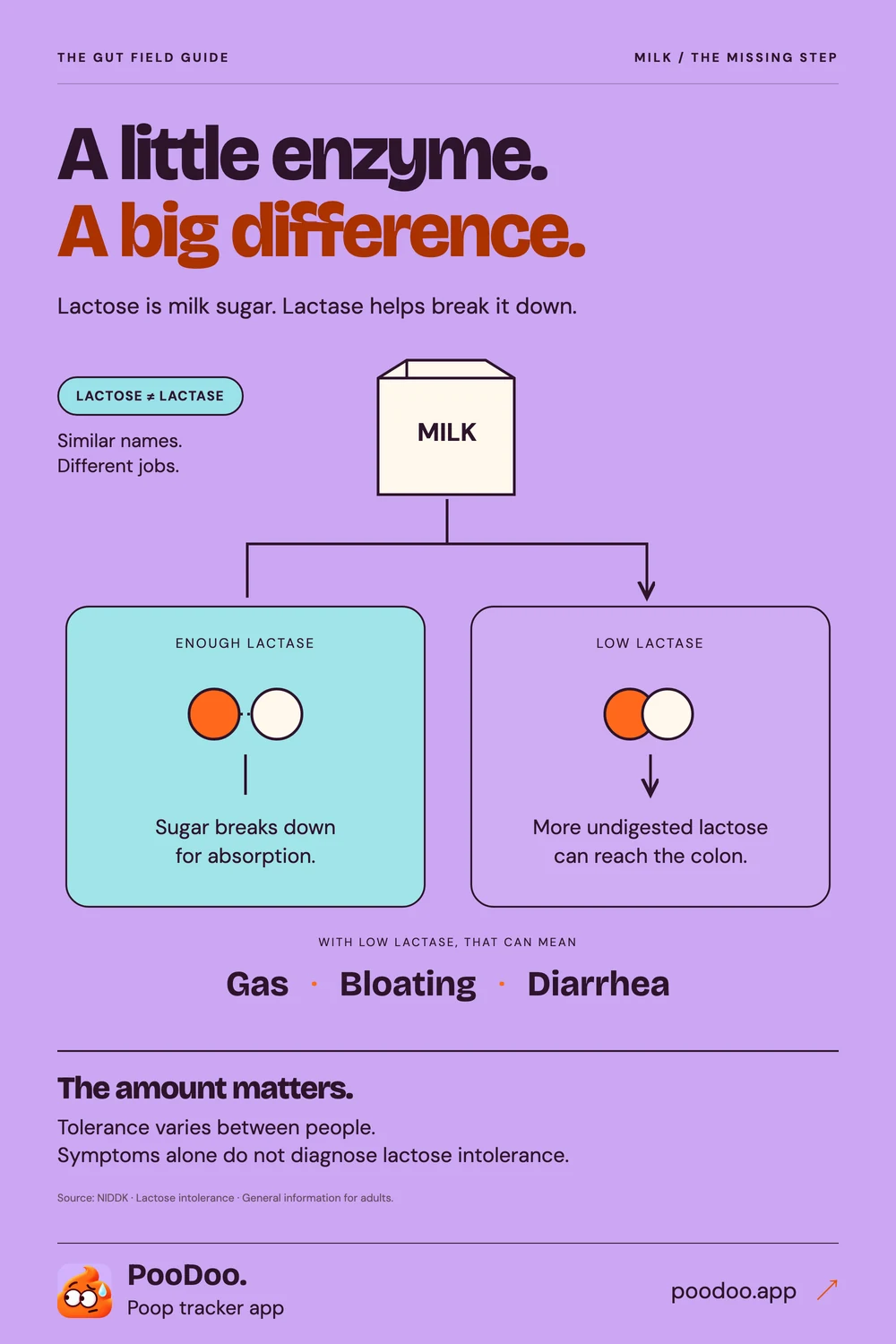
Lactose is a sugar in milk. The enzyme lactase helps digest it in the small intestine. When lactose is not fully digested, it can contribute to gas, bloating and loose stools. Having difficulty absorbing lactose does not mean everyone experiences the same symptoms or tolerates the same amount.
That distinction matters when talking about dairy. A small amount in a meal and a large milkshake are not equivalent. Write down the actual food and portion instead of using the broad label “dairy reaction”, which can make the pattern seem more definite than it is.
Separate milk sugar from milk protein
Milk allergy involves the immune system and can be dangerous. Lactose-free cow’s milk still contains milk proteins, so it is not a safe substitute for someone with a milk allergy. Symptoms such as breathing difficulty or swelling are not something to test with another small serving.
Even without an allergy, discomfort after a café drink could involve several factors: the coffee, milk amount, sweetener or meal. A diary can show that these occurred together. It cannot determine which explanation is correct or replace an assessment when symptoms keep returning.
Protect variety as well as comfort
Many people with lactose intolerance tolerate some lactose, and complete dairy avoidance is not always necessary. A clinician or dietitian can help consider portions and suitable alternatives while protecting calcium and vitamin D intake. Do not assume a plant drink has the same nutritional profile as milk; labels differ.
Avoid making several exclusions before your appointment. Instead, bring examples of products that seem comfortable and those associated with symptoms. If you have already reduced dairy, note what you use instead. This makes the discussion about a workable eating pattern, not a growing list of rules.
Record the product, not just the category
Useful details include the product name, approximate amount, whether it was lactose-free and what else was in the meal. Add when discomfort began and whether there was gas, pain or a loose bowel movement. Include days without symptoms too.
A practical note might read “small bowl of yoghurt with breakfast; comfortable” or “large milk drink, later bloating”. Those are observations, not conclusions about every yoghurt or milk drink. If testing is needed, a clinician can decide whether a breath test or another assessment is appropriate.
When to get help
Arrange advice for recurring symptoms, ongoing bowel changes or unintended weight loss. Blood, black tarry stool, severe pain or dehydration needs prompt assessment. Sudden swelling of the lips or tongue, difficulty breathing or faintness after food is an emergency. Do not conduct a home food challenge after a suspected allergic reaction.
Bring these details to the discussion
- Name the product and approximate serving.
- Separate bloating, pain and loose stool in your notes.
- Include comfortable servings as well as difficult ones.
- List any foods you have removed and their replacements.
A few more useful answers
Does lactose intolerance mean no dairy ever?
Not necessarily. Tolerance varies and some people manage smaller portions or lower-lactose options with professional guidance.
Can a diary diagnose lactose intolerance?
No. It helps organise the history. A clinician can assess other explanations and decide whether testing is useful.