
A trip can rearrange nearly everything your gut is used to: the time you eat, where you sleep and when a bathroom is available. Some people notice constipation; others develop loose stools. Planning a little comfort into the journey is more useful than expecting perfect regularity.
Start with the parts of travel you can plan
Before a long journey, think about access to drinks, meals and toilets rather than trying a new “gut reset”. Leave a little time for breakfast and a bathroom stop. If you use prescribed medicines, keep a list and ask in advance about anything that needs special travel planning.
A practical note can include the departure day, time-zone change and the last comfortable bowel movement. That gives later symptoms a clearer timeline. You do not need to track every holiday meal or turn a trip into an experiment.
Constipation and diarrhoea need different responses
Changes in routine, postponing the urge and reduced activity can contribute to constipation. New diarrhoea during a trip can also involve infection from food or water. The fact that both started away from home does not mean they have the same cause.
Describe what is happening before deciding what to do: hard stool and straining, or repeated watery visits and urgency? Mention fever, vomiting or pain separately. Treating all of these as “my travel stomach” can hide information that matters to a pharmacist or clinician.
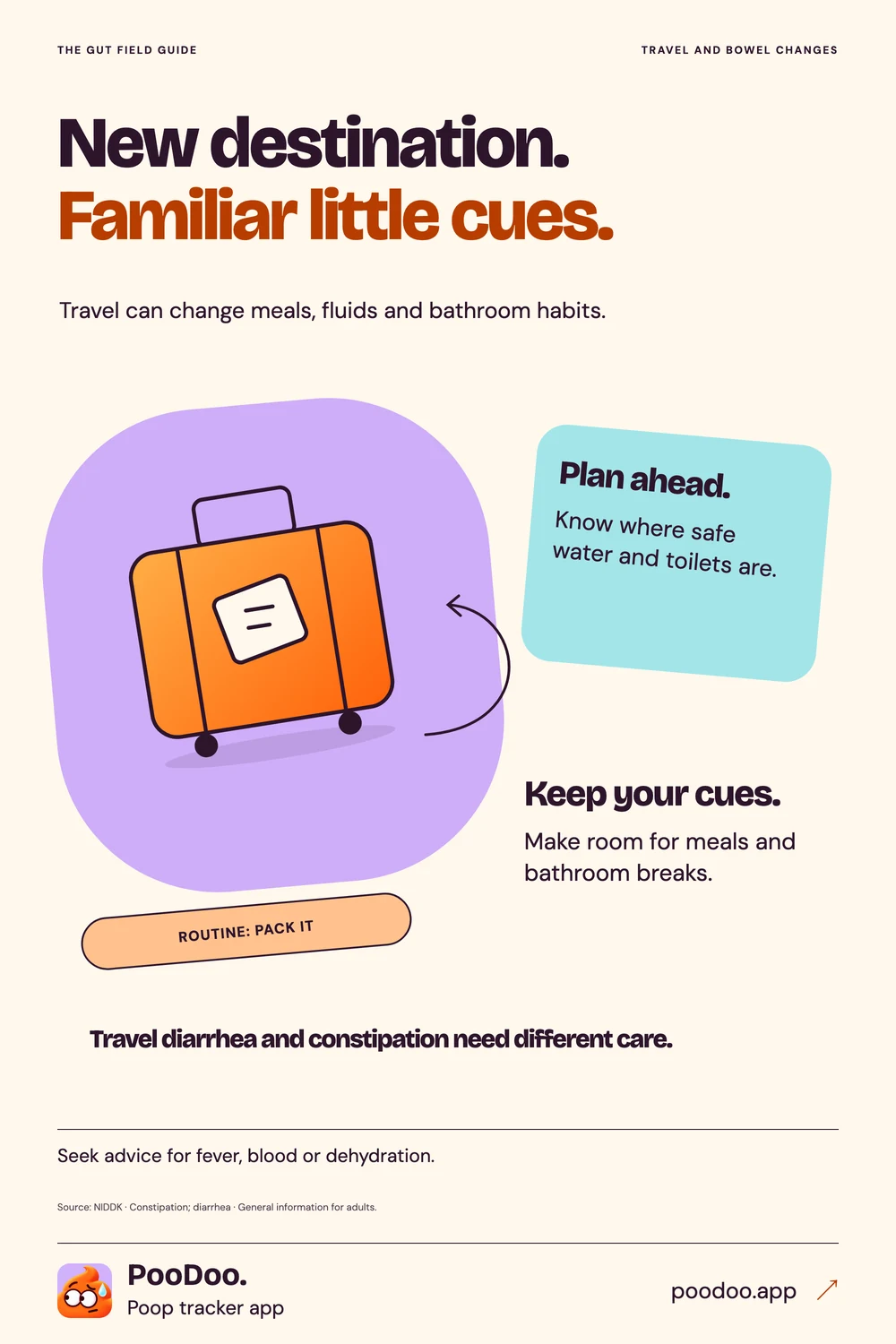
Keep familiar habits, choose food and water carefully
When possible, include familiar foods, drink regularly and move during long periods of sitting. In places where food or water safety is uncertain, choose food served thoroughly cooked and hot, safe drinking water and fruit you can peel yourself. Handwashing before eating remains useful.
No precaution removes every risk, and getting ill is not proof that you did something wrong. Avoid starting antibiotics or other medicines simply because a travel companion uses them. A travel-health professional can advise on a plan appropriate to your destination and health.
If symptoms start, keep a usable timeline
Note when symptoms began, the number of loose stools, fever if measured, vomiting and whether you can keep fluids down. If there is diarrhoea, replacing fluid and salts matters; a pharmacist can advise about oral rehydration solution and how to prepare it safely.
After returning home, mention the trip if symptoms continue. Include places visited and any medicines taken, without assuming a particular meal caused the illness. A short clear timeline is easier to use than a long list of guesses about everything you ate.
Do not wait for the journey to end
Seek urgent help for blood, black tarry stool, severe pain, repeated vomiting or dehydration. Contact a clinician for diarrhoea lasting more than two days, high fever or worsening symptoms, sooner if pregnant, older, immunocompromised or medically vulnerable. Constipation with vomiting and inability to pass gas also needs urgent assessment.
Before you leave
- Plan realistic drink and bathroom stops.
- Keep your medication list and health information accessible.
- Check food and water advice for the destination.
- Know how to reach medical help if needed.
A few more useful answers
Is it normal to skip a day while travelling?
A short change can happen, but symptoms and your usual pattern matter. Severe pain, vomiting or inability to pass gas should not be watched at home.
Should I take antibiotics just in case?
Do not self-prescribe them. A clinician may provide a specific travel plan when appropriate; many episodes do not require antibiotics.