If a bathroom visit feels like hard work, counting how often you go will not tell the whole story. Dry pellets, a lumpy stool or repeated pushing are useful details to notice. The aim is comfortable emptying, not winning a daily bathroom streak.
Texture can matter more than frequency
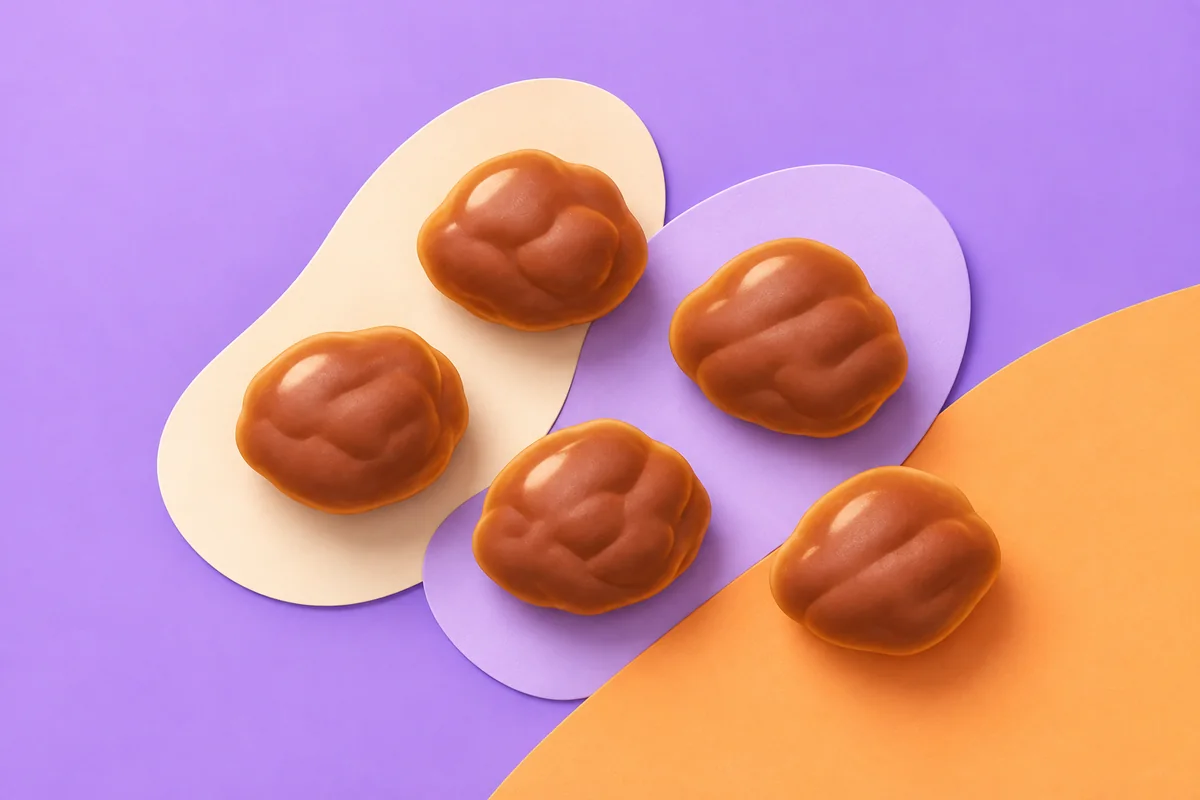
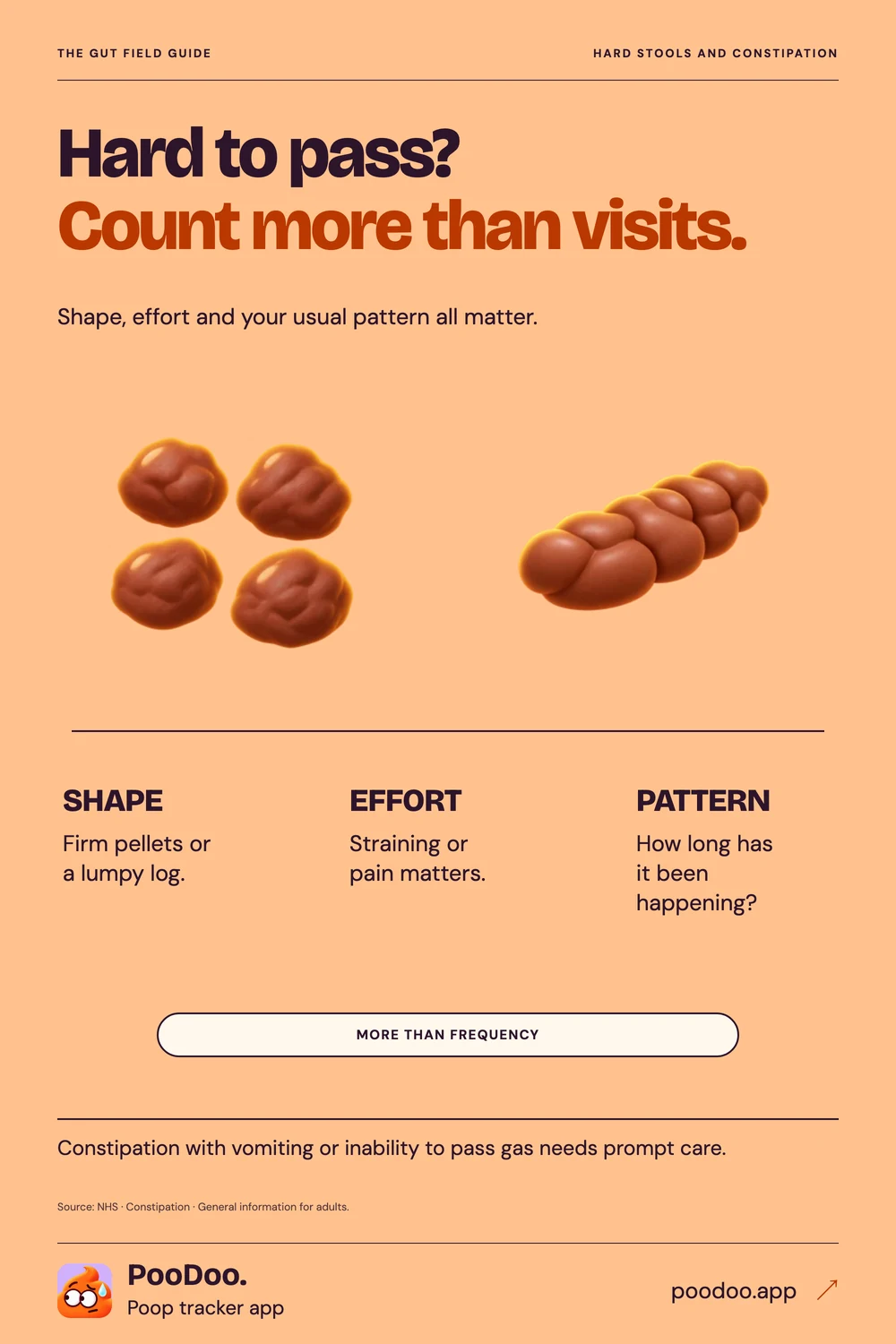
Types 1 and 2 on the Bristol stool chart describe separate hard pieces or a lumpy sausage shape. They can occur with constipation, including in someone who still has a bowel movement each day. The chart gives you a shared description; it does not identify the reason.
Note whether passing stool hurts, requires straining or leaves a feeling of incomplete emptying. Those details can help a clinician understand what “constipated” means in your own experience, rather than assuming that everyone uses the word in the same way.
Look beyond one glass of water
Low fluid intake, a low-fibre diet, less movement and postponing the urge may play a part. Medicines and health conditions can contribute too. It is therefore misleading to assume every hard stool means you simply forgot to drink.
Write down recent changes without blaming yourself: a new prescription, several long drives or a different meal pattern. Bring the medication list to a pharmacist or clinician if needed. Do not stop a treatment on your own, even when the timing looks convincing.
Choose a change you can actually repeat
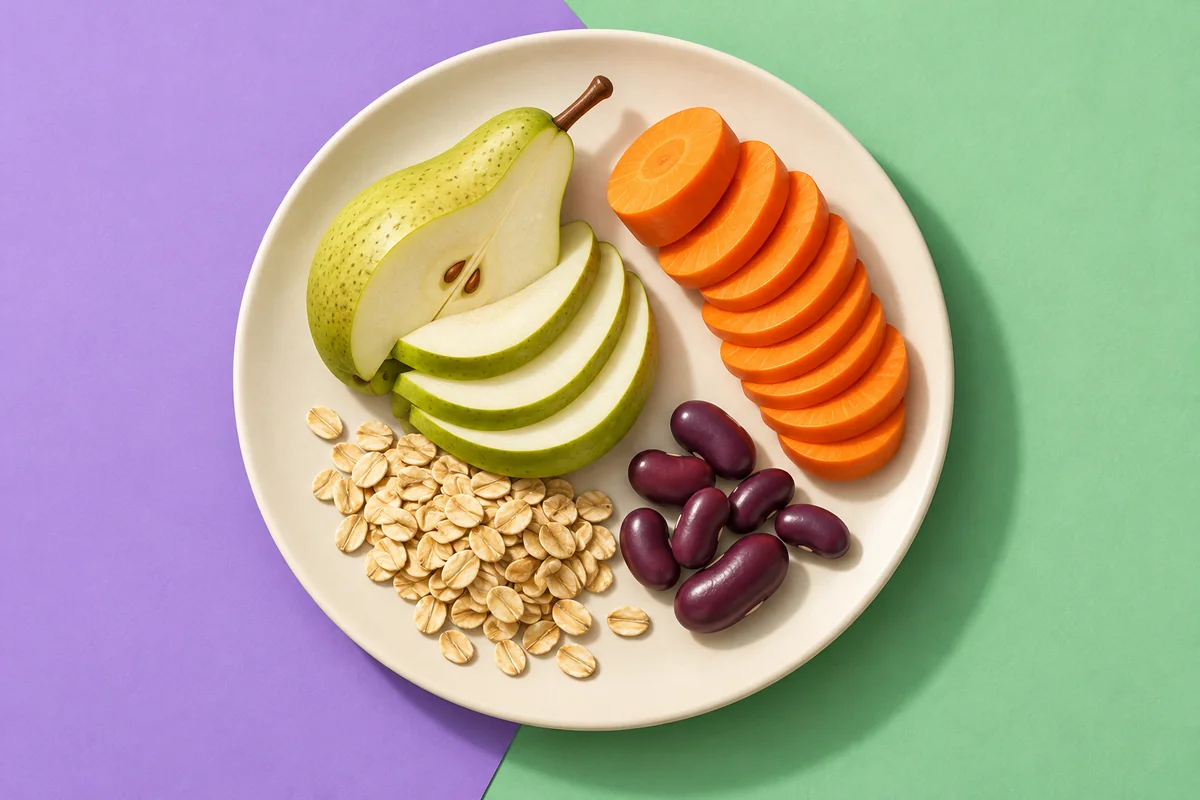
If you eat little fibre, increase fibre-rich foods gradually rather than adding a large bran portion overnight. Include fluids alongside that change. Needs differ, especially if a clinician has set a fluid limit, so a universal number of glasses is not the right answer.
A manageable first step might be adding oats to breakfast, keeping a drink with a meal or making room for a short walk. Choose one that fits your day. The purpose is a sustainable routine, not a promise that a particular food will fix constipation.
Give the bathroom visit less pressure
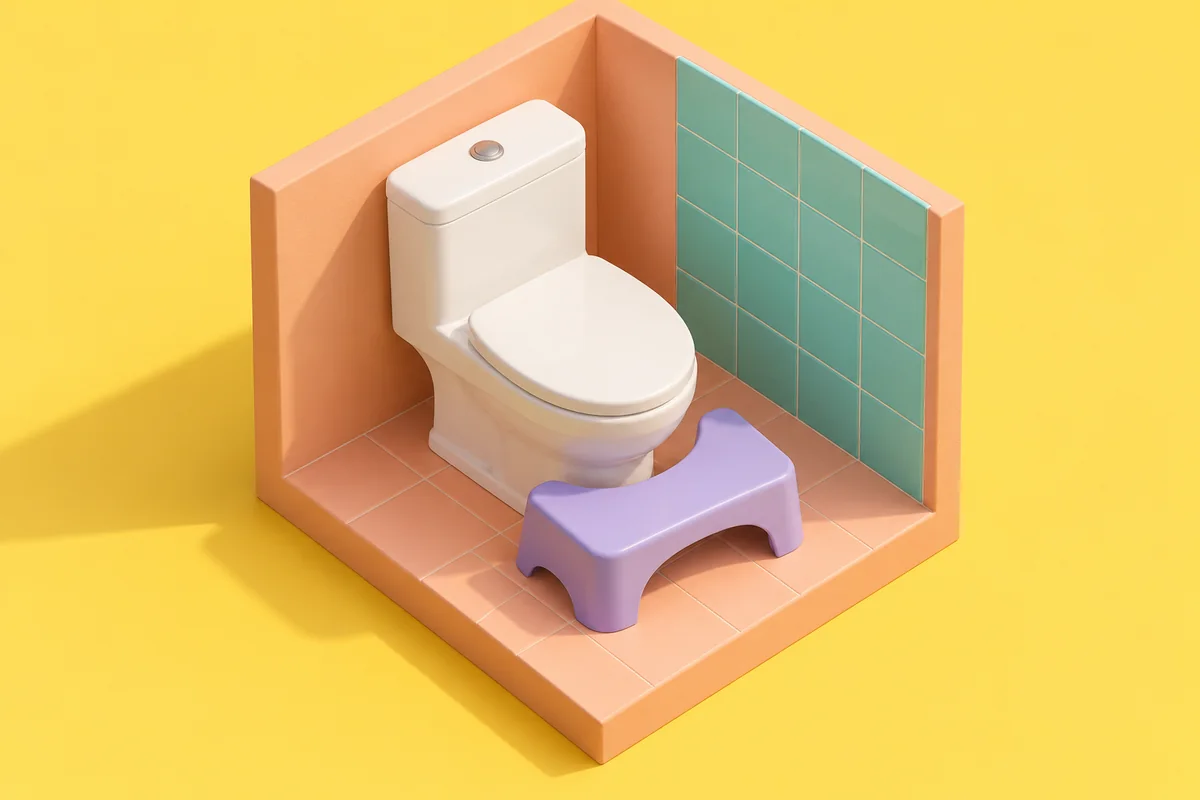
Respond to the urge when practical. A supported sitting position with knees a little above the hips may help some people, but a footstool is not a cure for every emptying problem. Avoid prolonged pushing or treating the toilet as a place to wait indefinitely.
For a few days, record stool form and effort separately. “Type 2, needed to push, sore afterward” says more than “bad day”. Include any change you tried and whether it was comfortable; do not judge success only by the number of visits.
Know when self-care is not enough
Seek medical advice if constipation persists, regularly returns or causes ongoing pain. Blood in the stool needs assessment. Severe or constant abdominal pain, vomiting or inability to pass gas requires urgent help. Do not respond to those symptoms by loading up on fibre or taking repeated remedies while waiting for them to pass.
A gentler starting checklist
- Describe the stool using the Bristol chart.
- Notice pushing, pain and incomplete emptying.
- Choose one manageable food or routine adjustment.
- Ask for advice if symptoms continue or worsen.
A few more useful answers
Can I be constipated if I poop daily?
Yes. Hard stool, difficult passage and incomplete emptying can matter even when visits are frequent.
Will more water always solve it?
No. Adequate fluid matters, but persistent constipation can have other causes. Extra water is not a substitute for assessment.