If you leave the bathroom feeling that you have spent more time pushing than anything else, your sitting position is worth a look. A small adjustment may make the visit more comfortable. It is a practical option, not a guaranteed fix for constipation.
What a change of position can do
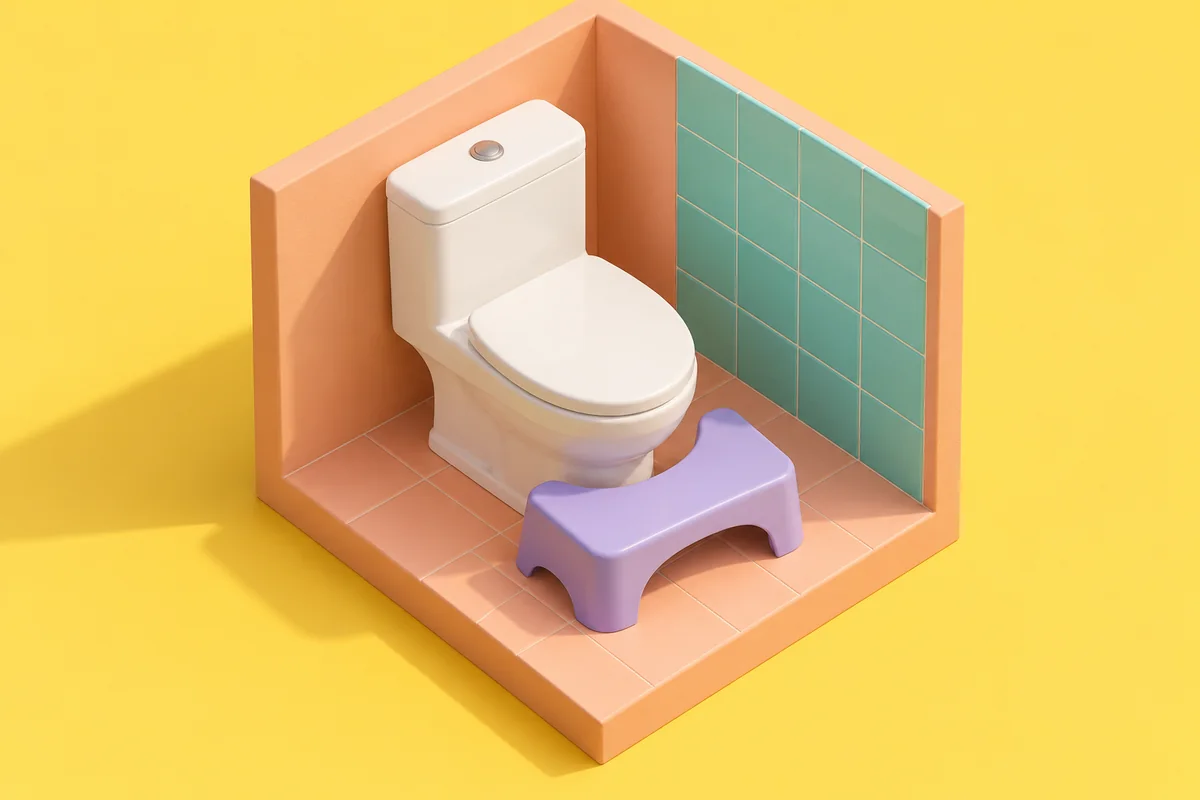
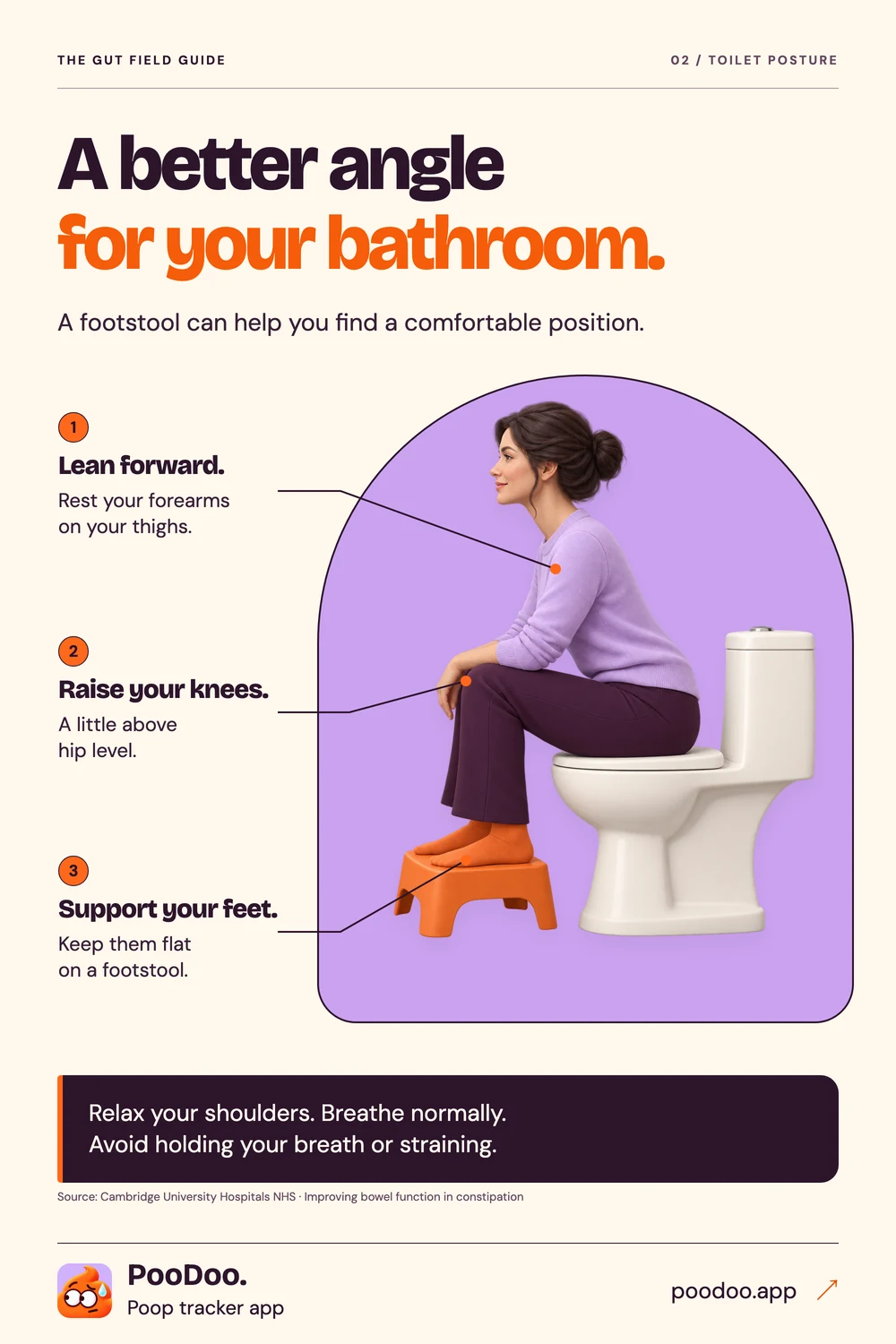
NHS guidance suggests trying a low footstool so your knees sit above your hips. This can make emptying easier for some people. The stool should be stable and allow your feet to rest securely; balancing on your toes or on an improvised unstable object defeats the purpose.
There is no need to copy an exaggerated squat from an illustration. Comfort, support and safe movement come first. If you have mobility problems, joint pain or difficulty getting on and off the toilet, ask for an assessment that fits your needs rather than forcing a standard position.
Settle in, then relax
Place your feet on the floor or a suitable low support, let your knees separate comfortably and lean slightly forward if that feels natural. Keep breathing rather than holding your breath and pushing hard. A relaxed position matters more than measuring an exact angle.
Try the adjustment when you already have the urge. The first question is simple: does sitting this way feel steadier and more comfortable? A position that causes pain, numbness or instability is not a position you need to persevere with.
A footstool does not soften hard stool
Posture addresses only one part of a bathroom visit. Hard stool, medicines, an unsettled routine and pelvic-floor coordination problems may need different support. Buying a bathroom accessory cannot establish which of those is involved.
It helps to separate stool texture from effort. If stool is soft but you repeatedly struggle to empty, mention that specifically to a clinician. If stool is dry and lumpy, say so. These are different observations even when both experiences get labelled constipation.
Take the pressure off the attempt
Allow a little unhurried time, but do not keep pushing or stay seated for a long scrolling session. If nothing is happening, get up and return when the urge comes rather than treating the visit as a task that must be completed.
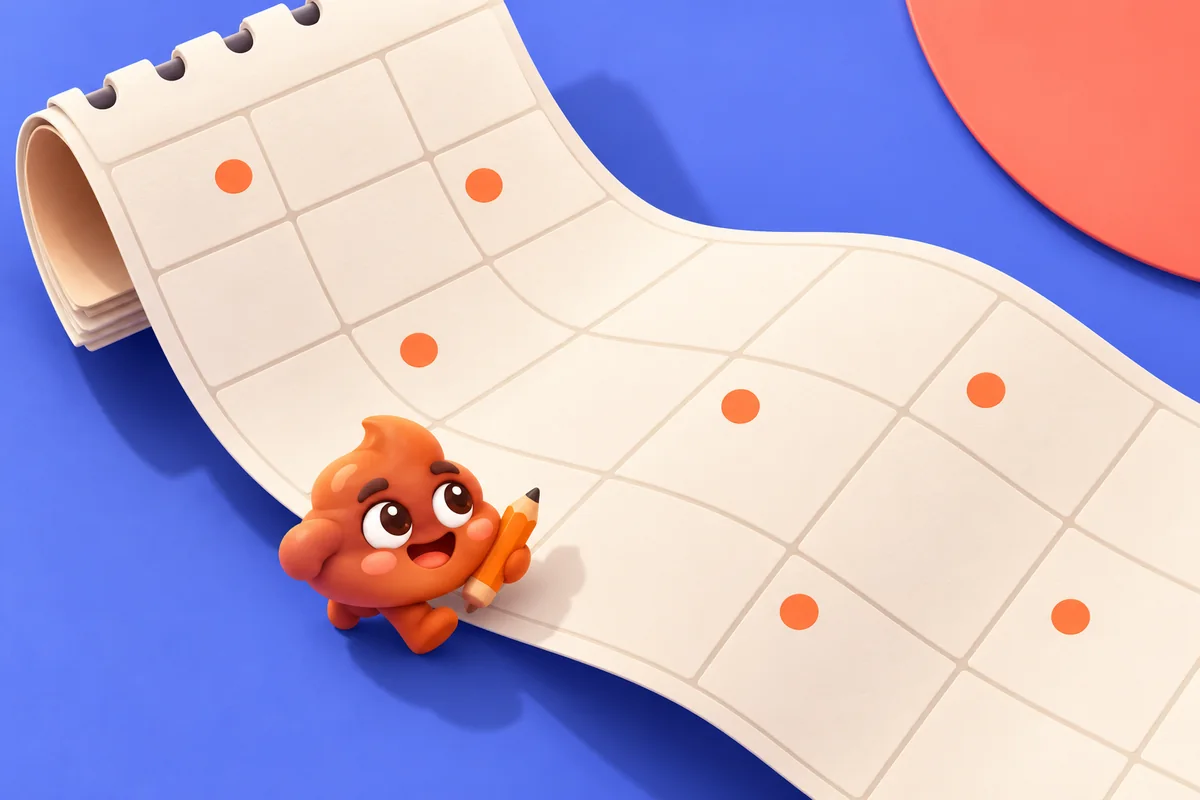
You can record effort using ordinary words: easy, some pushing or difficult. Add whether you tried a different position and how it felt. Comparing several comfortable attempts is more informative than deciding a support works or fails after one unusual day.
Repeated difficulty needs more than a new position
Get advice for persistent straining, pain, incomplete emptying or the repeated need to assist stool passage. A clinician may consider stool consistency, medicines and pelvic-floor function. Blood, black tarry stool or unexplained weight loss needs prompt assessment; severe abdominal pain with vomiting or inability to pass gas needs urgent help.
A quick comfort check
- Use a stable foot support only if it feels safe.
- Let your feet and body feel supported.
- Breathe normally and avoid prolonged forceful pushing.
- Stop if the position hurts or makes you unsteady.
A few more useful answers
Does everyone need a toilet footstool?
No. It is an option that some people find helpful, not an essential purchase or a treatment for every cause of constipation.
Why is soft stool still hard to pass?
There can be several explanations, including emptying coordination. Persistent difficulty is worth discussing with a clinician rather than increasing fibre repeatedly.