
A missed morning can feel like your body has missed a deadline. But bowel habits do not follow one universal timetable. A useful check looks at how often you go, how comfortable it feels and whether something has changed for you.
There is a range, not a daily target
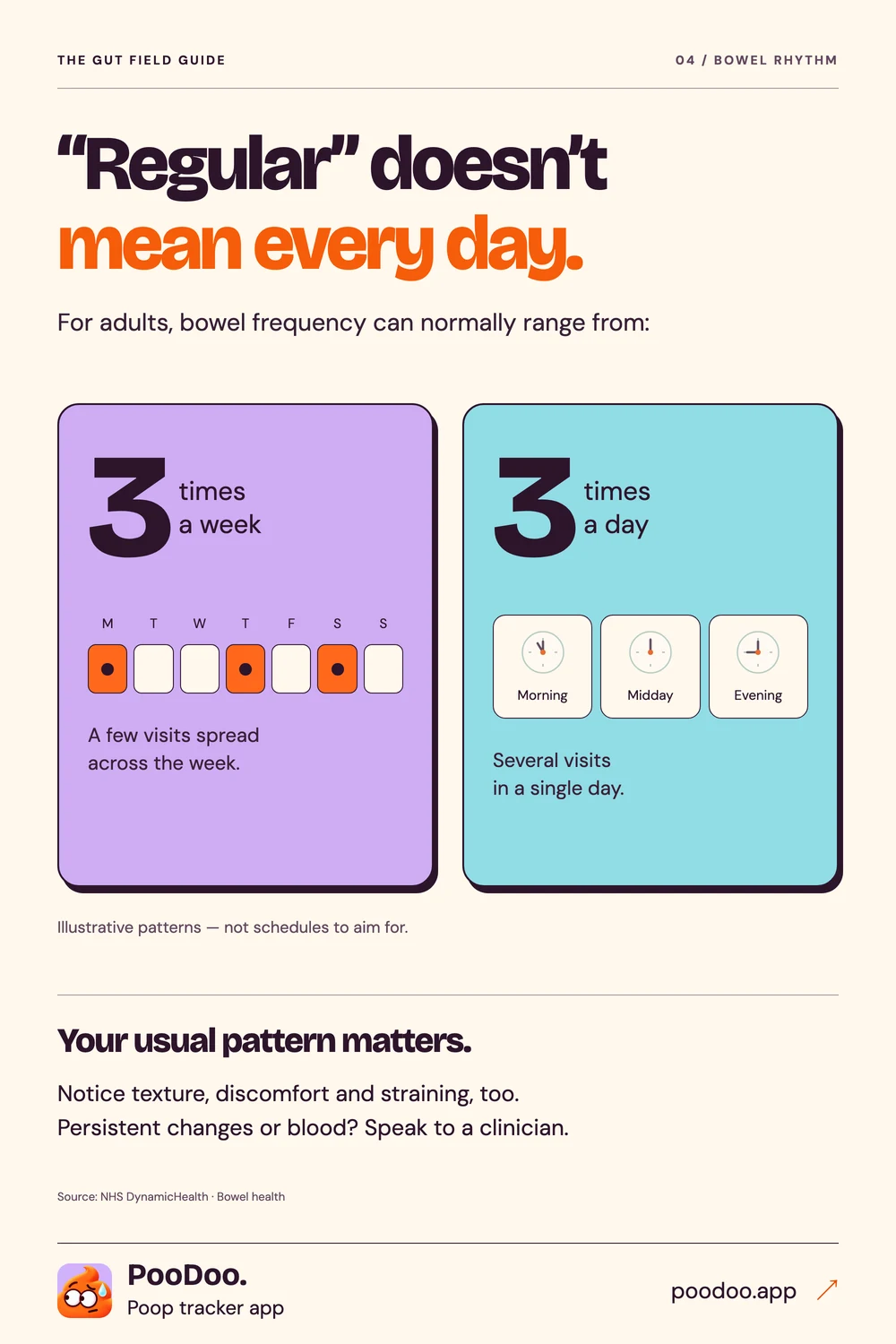
A commonly used adult range is three bowel movements a day to three a week. This describes variation across people, not a target you need to hit. Someone who comfortably goes every other day may have a different routine from someone who goes after breakfast and dinner. Neither schedule earns a better score.
Numbers also leave out an important detail: what happened during the visit. A daily bowel movement can still involve hard stool, pain or straining. Being inside a frequency range does not automatically mean that symptoms should be ignored.
Compare like with like
Think about an ordinary week before comparing yourself with an unusually busy one. A later breakfast, unfamiliar bathroom or change in medicines can all belong in the context. Record those changes as observations, without deciding in advance which one explains your stool.
A useful baseline is a simple description such as “usually once after breakfast, easy to pass”. It is more informative than an ideal number borrowed from a friend, fitness account or tracker. Your baseline can change over time, so it is a reference rather than a permanent rule.
Make space without forcing a result
Give yourself a comfortable opportunity to use the bathroom and respond to the urge when you can. Regular meals, everyday movement and adequate fluids can support a routine. There is no need to keep sitting or push harder because a particular day is blank on the calendar.
If bowel habits are already uncomfortable, avoid starting several supplements or restrictive diets at once. A pharmacist or clinician can help you choose an appropriate next step. Keep prescribed medicines unchanged unless your prescriber advises otherwise.
Record visits and gaps differently
A day with no stool is different from a day when you forgot to log. Mark that distinction if possible. Add a stool description and whether the visit felt easy, strained or incomplete. This makes a weekly view useful without turning each bathroom visit into a lengthy assessment.
At the end of the week, ask what actually changed: fewer visits, harder stool, more urgency or simply a different time? An average alone can hide alternating hard and loose stools. Keep the short notes alongside the numbers.
When a changed pattern needs attention
Arrange medical advice for a persistent or unexplained change, repeated pain or constipation that does not improve. Seek prompt help for blood, black tarry stool or unexplained weight loss. Severe or constant abdominal pain, vomiting and inability to pass gas need urgent assessment. Do not wait to complete a tracking week before getting help.
A useful seven-day snapshot
- Record the time of each visit and the stool shape.
- Mark discomfort, straining or urgency in a few words.
- Distinguish no bowel movement from a missing entry.
- Summarise what changed from your usual routine.
A few more useful answers
Is skipping one day automatically constipation?
No. A single gap is not enough to decide. Hard or painful stool, difficult emptying and a sustained change are relevant too.
Should I aim to go at the same time every day?
A regular opportunity may help, but the clock is not a requirement. Avoid forcing a bowel movement to keep a streak.