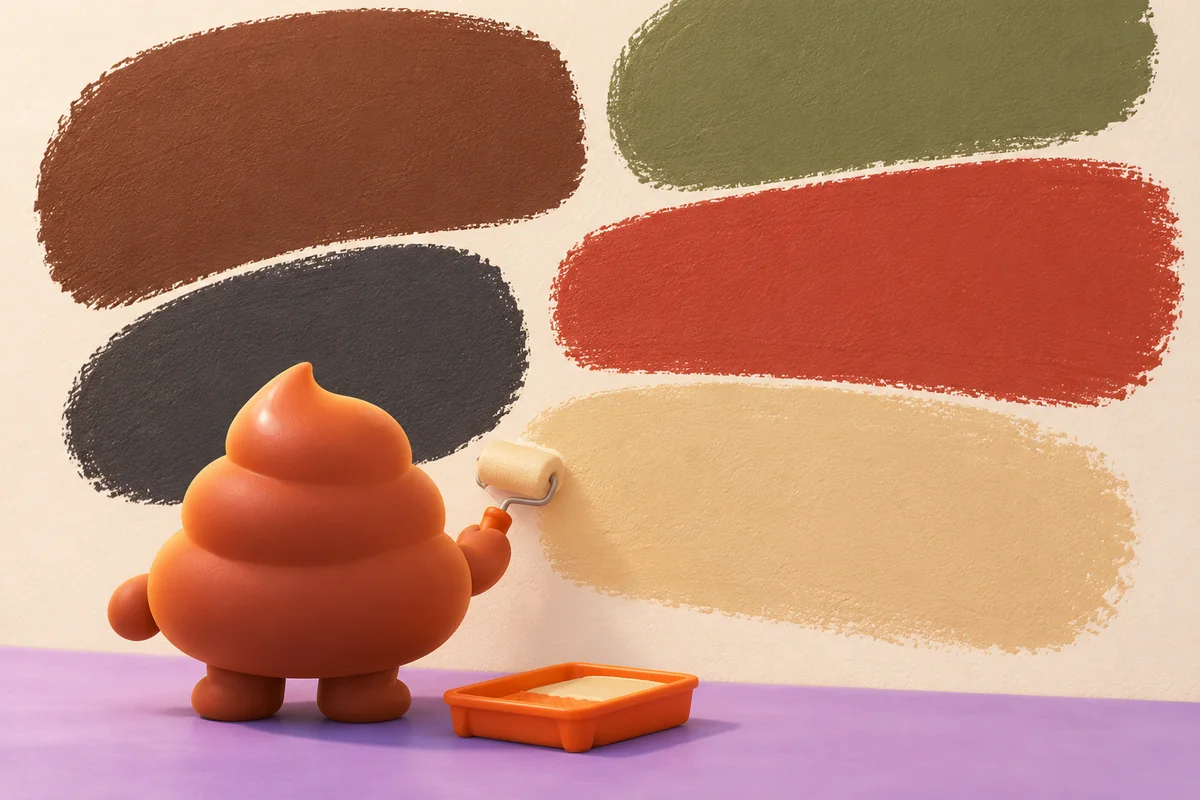
An unexpected colour in the toilet can turn a routine visit into a worried search. Colour sometimes reflects food or medicines, but it cannot be interpreted safely on its own. Start with what you see and how you feel, not a diagnosis from a colour chart.
Brown is a range, not one exact shade
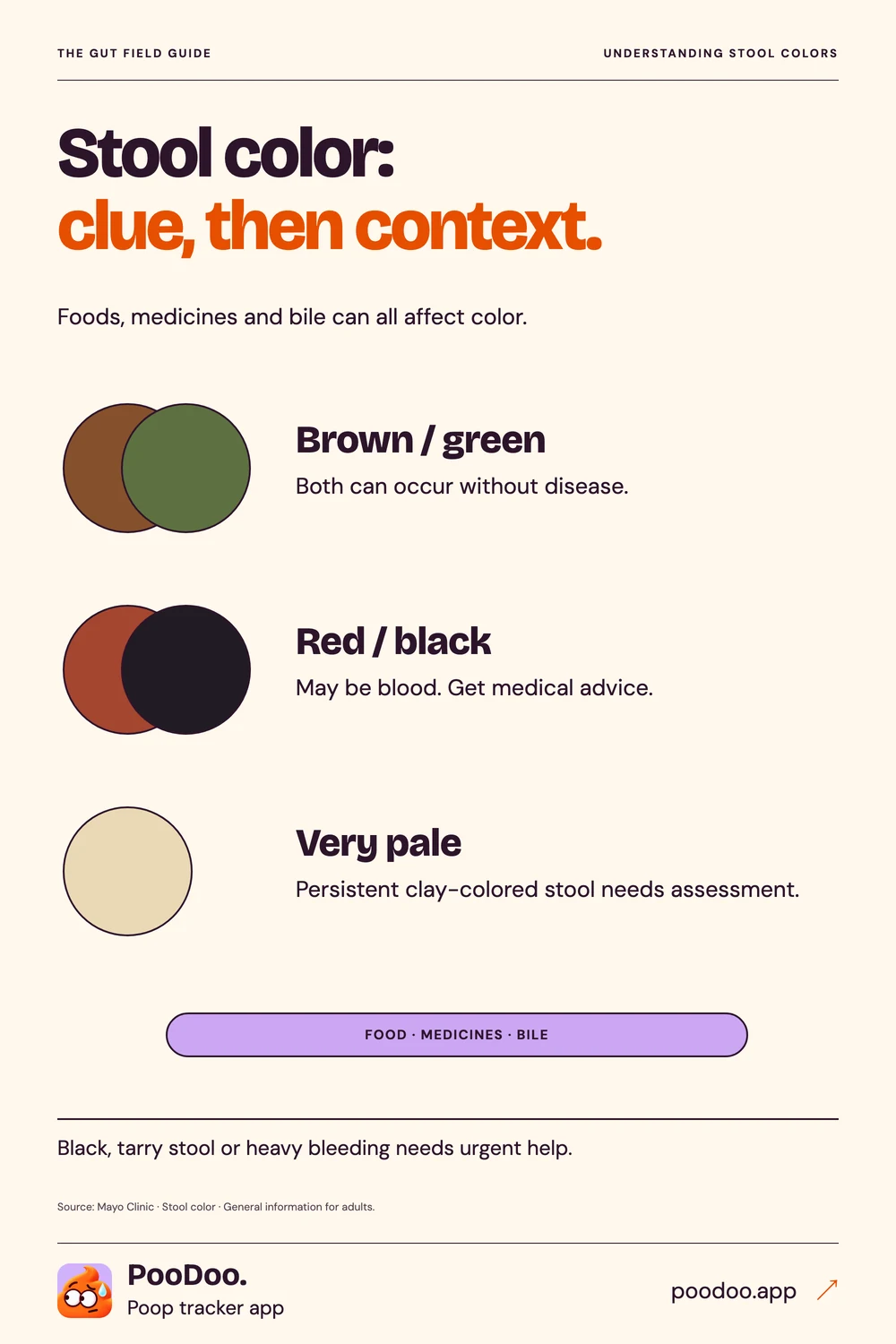
Stool colour is influenced by bile and what passes through the digestive tract. Brown shades vary, and green can occur with foods or quicker movement through the gut. Lighting, toilet water and a screen can also make a colour difficult to describe accurately.
A tracking colour is a rough observation, not a laboratory measurement. You do not need to match a swatch precisely. Record the closest plain-language description and whether the stool was formed, loose or watery. Texture and other symptoms help give the observation context.
Food and medicines are context, not clearance
Beetroot and food colouring may affect red tones; iron or bismuth can make stool dark. Mention these to a clinician if the colour concerns you. Do not assume a recent food or medicine proves that blood is absent, and do not stop prescribed treatment without advice.
A useful note lists the product and when it was started, rather than declaring “red because of beetroot”. That leaves the explanation open. An online image or photo cannot reliably distinguish every harmless colour change from a symptom that needs assessment.
Red blood and black tarry stool need attention
Visible blood, dark red stool or a black, sticky, tar-like stool should be assessed promptly. Black tarry stool can reflect bleeding higher in the digestive tract. Heavy or ongoing bleeding, faintness, dizziness or vomiting blood needs emergency care. Do not wait to see what tomorrow’s log looks like.
If you are unsure whether you are seeing blood, seek advice rather than using a food diary to reassure yourself. Mention medicines, especially those affecting bleeding risk, and any pain or weakness. The diary supports the history; it should not delay the conversation.
Persistent pale or greasy stool is different
Very pale or clay-coloured stool can relate to reduced bile reaching the intestine. Seek prompt advice if this persists, especially with dark urine or yellowing of the eyes or skin. Repeated yellow, greasy, difficult-to-flush stool also deserves assessment, particularly with weight loss.
These descriptions are reasons to ask for help, not ways to identify a specific organ problem yourself. One colour can have several explanations. Keep the note descriptive and include whether the change affects every visit or only some of them.
Use symptoms to guide the next step
Seek urgent help for severe abdominal pain, dehydration, blood or black tarry stool, with emergency care for heavy bleeding or faintness. Arrange advice for persistent unexplained colour changes even without pain. If green or another change occurs with ongoing diarrhoea, the diarrhoea needs attention too; colour alone should not become the focus.
A useful colour-change note
- Describe the colour in ordinary words.
- Add stool texture and whether the change repeated.
- List relevant foods, supplements and medicine changes.
- Record pain, dizziness, fever or other symptoms and seek help when indicated.
A few more useful answers
Can iron make stool black?
Yes, but that does not let you safely dismiss a black tarry stool or other signs of bleeding. Seek advice if the appearance is concerning or uncertain.
Does green stool always mean infection?
No. Several things can affect colour. Persistent diarrhoea, dehydration or other symptoms matter more than a colour label alone.