
An important meeting approaches and your stomach starts making its own plans. Or a difficult week leaves your usual bathroom routine unsettled. Stress can belong in the picture, but “just stress” is not a useful way to dismiss symptoms.
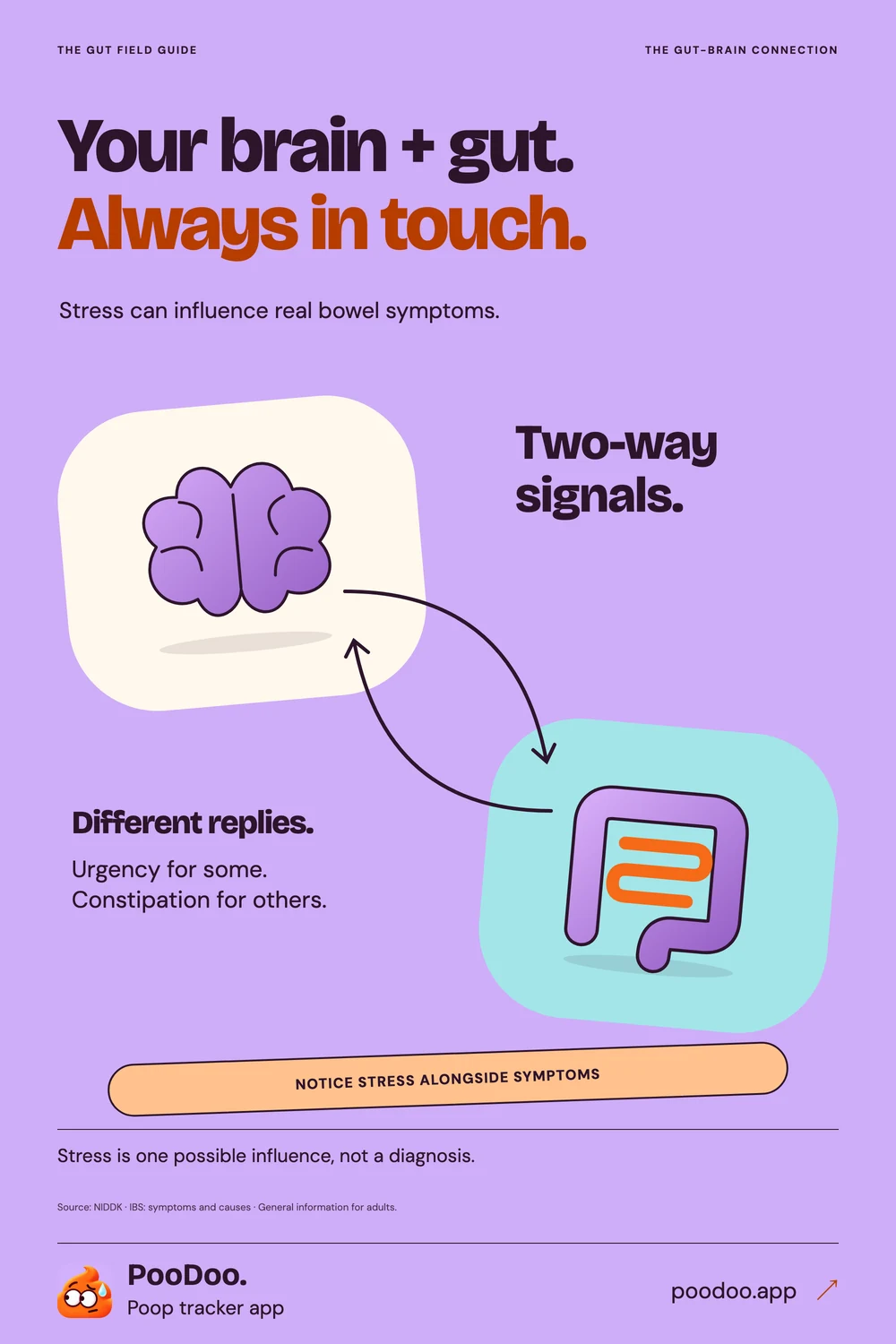
The brain and gut communicate
Disorders such as irritable bowel syndrome involve the interaction between the brain and gut. This can affect sensation and bowel function. It helps explain why a stressful situation may matter, but it does not mean symptoms are imagined or that stress is the only possible cause.
A person can feel calm and still have bowel symptoms. Another may notice a connection during a busy period. Neither experience is a test of how well they manage emotions. The useful question is what support and assessment fit the symptoms they actually have.
Stress changes the day around the gut too
A pressured day may also mean a missed meal, more coffee, less sleep or putting off the bathroom. Those details make it difficult to attribute a bowel change to stress alone. The diary should leave room for the whole routine rather than assigning a single label.
Try a short factual description such as “presentation day, lunch late, slept poorly”. It is more useful later than a judgement like “failed to relax”. You do not need to record personal details about the stressful event if you prefer to keep them private.
Make one part of the routine easier
Choose a manageable form of support: a pause before a meal, a short walk, a calmer bedtime routine or time to use the bathroom without rushing. These steps may help everyday wellbeing; they are not promises to prevent a flare or replace medical treatment.
If you have diagnosed IBS, a clinician can discuss options that may include gut-directed psychological therapies. Seeking that support does not make symptoms less physical. It is one possible part of care, alongside diet, medicines and other approaches when appropriate.
Track without watching yourself all day
A brief daily stress rating can provide context, especially if you use the same simple scale. Add bowel symptoms when they occur, then put the diary away. Repeated checking after every sensation can make the habit feel like another demand rather than a useful record.
Look for exceptions as well as apparent links: a stressful day without symptoms or a quiet day with discomfort. Those entries help prevent a neat but misleading story. If tracking increases worry, reduce the detail or discuss a simpler approach with a clinician.
Symptoms deserve care even during a stressful time
Arrange advice for persistent pain, recurrent diarrhoea or constipation, or symptoms that interrupt sleep or daily life. Blood, black tarry stool or unexplained weight loss should be assessed promptly. Severe pain or dehydration needs urgent help. Do not delay care because a difficult week seems to offer a plausible explanation.
A low-pressure daily note
- Use one consistent word or scale for stress.
- Add sleep, meals or travel only when relevant.
- Record the bowel symptom separately from your explanation.
- Include comfortable days and stop tracking if it becomes overwhelming.
A few more useful answers
Does a stress-related pattern mean I have IBS?
No. IBS is a clinical diagnosis based on symptoms, history and appropriate assessment. A diary alone cannot establish it.
Can relaxation cure bowel symptoms?
There is no such guarantee. Relaxation may support wellbeing, while persistent symptoms may need several kinds of treatment and professional assessment.